A copper standing seam roof is the right call for homeowners who plan to stay put for decades, hate the idea of ever climbing back up on the roof, and can absorb a higher upfront cost for a system that’s still performing when most asphalt roofs have been replaced three times over. It’s not the budget option, and it’s not for someone flipping a house in five years. For everyone else who wants a roof they install once, SW Metal Roofing’s custom fabrication and lifetime leak-free warranty make that long payoff a lot less risky.
TL;DR:
- Copper standing seam roofs can last 50 to 100 years with proper installation, avoiding the need for multiple asphalt roof replacements over their lifespan.
- The cost averages $28 to $31 per square foot installed, with heavier gauge copper and complex roof designs increasing expenses significantly.
- Proper substrate, flashing, and seaming details are critical, as poor workmanship can drastically reduce a copper roof’s lifespan and performance.
- Metal panels are the easy part; fabrication accuracy and quality craftsmanship are key to ensuring long-term durability and avoiding early failure.
- Slightly accelerating patina formation is possible through expert chemical treatments, but it risks uneven finishes if not carefully applied.
Table of Contents
- What Is a Copper Standing Seam Roof?
- Is a Copper Roof Worth the Investment?
- What Does a Copper Standing Seam Roof Cost?
- What Installation Details Actually Determine a Copper Roof’s Lifespan?
- How Long Does It Take for a Copper Roof to Turn Green?
- Can You Install Solar Panels on a Copper Standing Seam Roof?
- How Do You Vet a Contractor for a Copper Roof?
- Why Fabrication Quality Makes or Breaks a Copper Roof
- Ready to Move Forward With a Copper Roof?
- Sources
- FAQ
What Is a Copper Standing Seam Roof?
Standing seam refers to the raised, interlocking ribs that run vertically up each panel, where two adjacent sheets of metal lock together above the roof surface. All the fasteners hide underneath that raised seam instead of punching through the face of the panel, which is the detail that separates standing seam from exposed-fastener corrugated or shingle-style metal roofing. Fewer exposed penetration points means fewer places for water to find its way in over the decades, and that concealed-fastener design measurably improves weathertightness compared with systems that rely on screws driven straight through the metal.
Copper adds another layer to the equation because it expands and contracts more than steel or aluminum as temperatures swing. That’s why the seam profile you choose matters:
- Snap-lock seams click together without soldering or crimping, which speeds installation and still keeps fasteners hidden when the panels are specified correctly.
- Mechanically seamed panels get folded and crimped with a seaming tool, giving a tighter, more weathertight joint on lower-slope or high-exposure roofs.
- Flat-seam systems lie nearly flush to the roof deck for a more traditional, hand-crafted look, but they demand far more labor and soldering skill.
Architects and installers gravitate toward standing seam because it accommodates that thermal movement without buckling, while copper shingles trade some of that weathertightness for a scalloped, historic look that many homeowners still prefer on smaller accent roofs. If your goal is maximum performance on a full roof replacement, standing seam is almost always the more sensible pick.
Is a Copper Roof Worth the Investment?
The honest answer is yes for the right house, and the reasons split cleanly into what you gain and what you give up.
What you gain:
- Genuine longevity. Properly installed and detailed copper roofs commonly last 50 to 100 years, which is two to four asphalt roof replacements avoided over the same span.
- Low panel maintenance. The copper itself doesn’t rot, curl, or need recoating. Most of the wear happens at accessories, not the panels.
- A living finish. Patina isn’t just cosmetic. The oxide layer that forms over time is also what protects the metal underneath from further corrosion.
- Fire and impact resistance. Metal doesn’t ignite from embers the way wood shake or some composite shingles can.
What you give up:
- Higher upfront cost than almost any other residential roofing material.
- Staining risk where runoff crosses stucco, paint, or light-colored masonry.
- Galvanic corrosion if copper touches incompatible metals like uncoated steel fasteners or aluminum gutters without a barrier.
- Expensive mistakes. Poor flashing or seam detailing doesn’t just cause a leak. It can shorten the life of an otherwise 80-year roof down to a fraction of that.
Copper’s real lifespan is a workmanship story, not just a material one. A roof with excellent panels and sloppy flashing will fail decades before a modestly specified roof with meticulous detailing.
What Does a Copper Standing Seam Roof Cost?
Expect to pay more than any other common residential roofing product, and expect standing seam specifically to sit at the upper end of copper’s own price range. Installed copper roofing generally runs $11 to $35 per square foot depending on the format, with standing seam systems typically landing around $28 to $31 per square foot installed, materials and labor combined.
A handful of variables push that number up or down on any given house:
- Copper gauge and weight. Heavier copper (typically 16 or 20 ounce) resists denting and holds seams better but costs more per square foot than lighter-gauge material.
- Panel length and custom fabrication. Long, continuous runs cut down on seams and lap joints, but they require shop equipment and custom-length fabrication rather than off-the-shelf panels.
- Roof complexity. Dormers, valleys, skylights, and steep or multiple pitches all add labor hours and custom flashing work that a simple gable roof never needs.
- Underlayment and flashing quality. High-temperature synthetic underlayment and properly detailed step and valley flashing cost more than the minimum code requirement, but they’re where copper roofs actually earn their long lifespan.
- Labor scarcity. Few crews are trained to solder and seam copper correctly, and that skill gap shows up in the bid.
When you’re comparing estimates from different contractors, don’t just look at the bottom-line number. Insist on line items for copper gauge and weight, panel and seam type, underlayment brand and rating, flashing details at every roof transition, and whether fabrication happens on-site or in a shop. A bid that lumps everything into one lump-sum number is a bid you can’t actually compare against a competitor’s.
Pro Tip: Build in a 10 to 15 percent contingency for custom flashing and detailing work around chimneys, skylights, and valleys. This is the most common place where an initial estimate gets revised upward once a crew is actually on the roof measuring transitions.
What Installation Details Actually Determine a Copper Roof’s Lifespan?
The panels themselves rarely fail. What fails is everything around them, and that’s the part most homeowners never think to ask about.
Substrate compatibility comes first. Copper needs a solid, nailable deck, and some fire-retardant treated (FRT) plywood products can leach corrosive salts that accelerate copper corrosion from underneath, especially where moisture gets trapped against the panel. A qualified installer checks deck material before a single panel goes down.
Underlayment matters just as much. Because copper expands and contracts more than steel, installers use slip-sheets and design in room for expansion so long panel runs don’t buckle or oil-can in the sun. Panel gauge is a strength-versus-cost tradeoff: heavier copper resists hail and foot traffic damage but adds material cost across a full roof.
On seaming method, soldered seams create permanent joints suited to domes and curved architecture, while most modern standing seam roofs use mechanical seaming to balance strength against thermal movement over large flat runs. Flashings should be soldered copper or a fully compatible sealant system, and fasteners and clips need to be copper or copper-compatible to avoid galvanic corrosion where metals touch.
- Check the deck and substrate before fabrication begins.
- Confirm slip-sheet and underlayment specs in writing.
- Ask which seaming method applies to your roof’s slope and geometry.
- Verify flashing material and fastener compatibility at every transition.
Most leak calls trace back to one of those details being skipped, not to the copper itself failing.
How Long Does It Take for a Copper Roof to Turn Green?
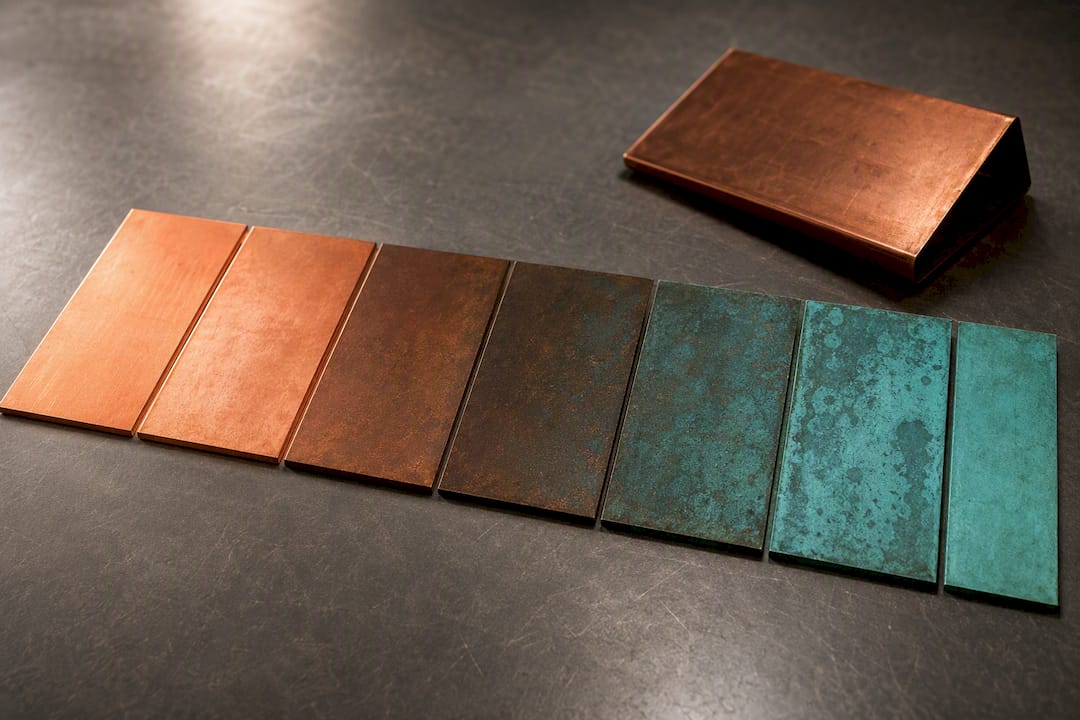
Patina develops in stages, and the chemistry is well documented. The bright, penny-orange copper first darkens to brown as a cuprite layer forms, then gradually shifts toward the green patina people associate with old copper roofs as basic copper sulfates like brochantite develop, with coastal and marine environments often producing chloride-based patinas such as atacamite instead.
Timeline varies more than most people expect. Published patination studies report ranges anywhere from about 6 to 50 years before a full green patina sets in, driven heavily by local rainfall, humidity, and airborne pollutants.
Maintenance during that transition is minimal:
- Skip pressure washing, which can strip developing patina unevenly.
- Avoid acidic cleaners or anything marketed to “brighten” metal.
- Keep debris and organic buildup off the roof so patina forms evenly rather than in patches.
Homeowners who don’t want to wait decades for the look can ask about artificial aging treatments, which chemically accelerate patina formation to days rather than years. These require a skilled applicator, since uneven application can leave a patchy finish that looks nothing like the natural process it’s mimicking.
Can You Install Solar Panels on a Copper Standing Seam Roof?
Standing seam is one of the more solar-friendly roof profiles on the market, mainly because clamp-on mounting hardware attaches directly to the raised seams without a single roof penetration. No penetrations means no new leak points and no warranty complications tied to drilled holes.
That said, integrating solar with copper takes a little extra planning:
- Confirm clamp compatibility. Ask the solar installer to use clamps rated for the exact seam profile and gauge on your roof, not a generic universal clamp.
- Watch for mixed metals. Copper gutters paired with aluminum solar racking or steel brackets can set up galvanic corrosion at the contact point without an isolating barrier.
- Ask who’s responsible for what. A leak under a solar array shouldn’t become a dispute between your roofer and your solar installer about whose warranty covers it.
- Sequence the work. Installing the roof and solar as one coordinated project avoids a second crew working on panels they didn’t fabricate, and keeps a single point of accountability if anything needs adjustment later.
Copper gutters deserve the same mixed-metal scrutiny. Pairing copper gutters with steel fasteners or aluminum downspouts without compatible connectors is a common, easily avoided source of premature corrosion. Any accessory choice that isn’t copper or explicitly rated as copper-compatible is worth a direct question before it goes on the roof, because it’s often the detail that voids a warranty later.
How Do You Vet a Contractor for a Copper Roof?
Copper roofing rewards good workmanship and punishes bad workmanship more than almost any other roofing material, so vetting the installer matters as much as picking the panels.
- Ask specific technical questions: copper gauge and weight, seam method (snap-lock vs. mechanically seamed), underlayment brand, and exact clip and fastener specs.
- Request evidence, not promises: shop fabrication photos, physical panel samples, a project gallery, and references you can actually call.
- Watch for red flags: vague material specs, reluctance to put warranty terms in writing, or plans to use non-copper fasteners without an isolating barrier.
Pro Tip: Ask to see a completed project with the same seam profile you’re considering, ideally one that’s a few years old. A roof that still looks tight and even after some weather exposure tells you more than any sales pitch.
Why Fabrication Quality Makes or Breaks a Copper Roof
Most articles on copper roofing treat the metal as the hero of the story. It isn’t. The panels are the easy part. What actually determines whether your roof hits year 80 or fails at year 25 is the fabrication and the crew standing on your roof.
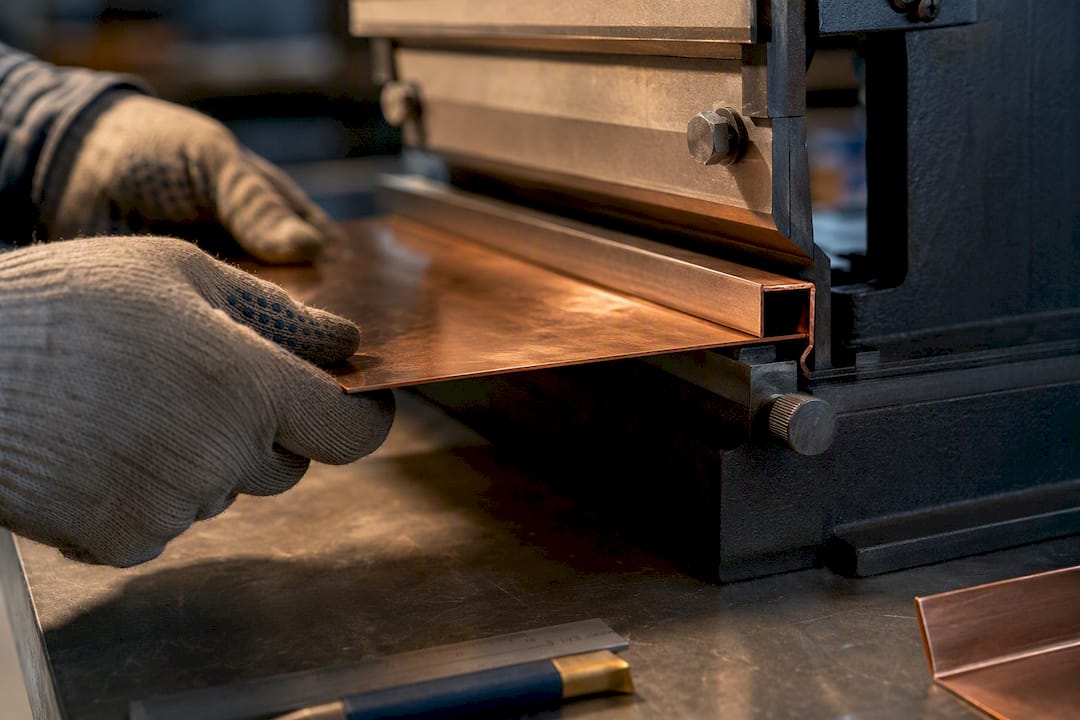
Certain providers build custom standing seam metal roofs, and copper is one of the materials that can be fabricated to spec rather than pulled off a shelf. That distinction matters more on copper than on any other metal, because copper’s thermal movement punishes generic, one-size-fits-all panel lengths. Some companies offer an 18-inch snap-lock profile built specifically for coastal wind and salt air conditions, which is an environment that produces harsh patina chemistry and significant galvanic risk from salt-laden moisture.
Some roof installations come with a lifetime leak-free warranty, and solar integration can be managed by a single crew rather than separate contractors. For a material where the accessories usually fail before the copper does, that kind of accountability is worth more than a slightly lower bid from someone who won’t put a warranty in writing.
— Marcus
Ready to Move Forward With a Copper Roof?
If you’ve read this far, you already know copper standing seam isn’t a roof you shop for on price alone. It’s a roof you shop for on fabrication accuracy, seam detailing, and who’s actually accountable when something needs adjustment ten years from now. Certain fabricators make copper panels to custom specifications rather than stocking generic lengths, including specialized profiles designed for coastal wind and salt exposure, and may offer warranties.
The next step isn’t picking a color or a finish. It’s getting a real, line-item estimate instead of a lump-sum guess. Ask for shop-fabrication photos and physical panel samples so you can see the gauge and seam profile before anything goes on your roof. Then schedule an on-site inspection so the crew can measure your specific roof geometry, not a generic template. Start with a detailed cost estimate or browse the custom copper roof types SW Metal Roofing fabricates to see what fits your house.
Sources
Technical specification and substrate guidance for this article drew on the Copper Development Association’s architectural handbook, which covers installation standards, thermal movement allowances, and FRT plywood compatibility issues in detail. Cost benchmarking and lifespan figures came from This Old House’s copper roof cost breakdown and The Roofing Brief’s copper roofing cost and pros-and-cons guide. Readers interested in the underlying chemistry of patina formation can review the peer-reviewed research on copper patination cited throughout the patina section.
- Copper Roofing: Cost, Lifespan, Pros and Cons
- Copper Roof Cost (This Old House)
- CDA Publication A4050-8/24: Copper in Architecture Design Handbook
- The chemistry of copper patination
FAQ
How Much Does a Standing Seam Copper Roof Cost?
Standing seam copper roofing typically costs about $28 to $31 per square foot installed, toward the higher end of copper’s overall $11 to $35 per square foot range depending on gauge, panel length, and roof complexity. SW Metal Roofing provides project-specific estimates rather than flat rates; current pricing details are available on its cost page.
What Are the Downsides of Copper Roofing?
The main downsides are a high upfront cost, potential staining on adjacent stucco or masonry from runoff, and galvanic corrosion risk if copper contacts incompatible metals without a barrier. Poor flashing or seam detailing can also shorten a copper roof’s effective lifespan far below its material potential.
What Is the Average Lifespan of a Copper Standing Seam Roof?
Properly installed and detailed copper roofs commonly last 50 to 100 years, with the exact figure depending heavily on substrate compatibility, flashing quality, and local climate exposure.
Is a Standing Seam Metal Roof Better Than Other Metal Roof Types?
Standing seam generally outperforms exposed-fastener metal roofing on weathertightness because its concealed fasteners eliminate the exposed penetration points that are the most common failure point on screw-down panels. It’s also the more solar-friendly profile, since clamp-on mounts attach to the seams without new roof penetrations.