A metal roof in San Diego typically costs $14,650 to $33,450 installed, and most homeowners land near $24,050. Local labor runs about 10 to 15 percent above the national average, and the roofing permit adds roughly $325, so San Diego quotes sit higher than the numbers you see in national guides. Use $24,050 as your planning anchor.
TL;DR:
- Standing seam suits coastal homes; corrugated costs less but needs more upkeep, while aluminum resists salt air at a higher price.
- Require identical written scopes and itemized labor, removal, disposal, and permit costs, then compare totals per square foot of actual roof area.
- Standing seam accepts solar clamps without panel drilling, and installing both systems together can reduce labor and avoid disturbing a newly installed roof later.
- Compare panel and workmanship warranties separately, checking coastal finish terms, solar attachment exclusions, transferability, and whether the installer has a proven local track record.
Table of Contents
- What do San Diego metal roofs cost per square foot and by house size?
- How much does each type of metal roof cost installed?
- What drives the price of a San Diego metal roof?
- How long does installation take, and when should you schedule?
- How do you compare metal roof quotes in San Diego?
- Why does a local standing seam specialist matter on the coast?
- What do solar panels add to a metal roof’s cost and benefits?
- What should you look for in a metal roof warranty?
- How much do maintenance and inspections cost over the life of a metal roof?
- What I would tell a San Diego homeowner to prioritize
- Ready to price your San Diego metal roof?
- FAQ
- Sources
What do San Diego metal roofs cost per square foot and by house size?
The numbers below come from the San Diego estimate in Costadia’s 2026 cost breakdown, and they give you a fast way to sanity-check any bid you receive. The overall installed range is $14,650 to $33,450, and the median homeowners see in estimates is $24,050. That range reflects a mix of roof sizes, materials and complexity, so your own total depends on where your home falls.
Here is how to translate that into your situation:
- Median to plan around: $24,050 is the figure most San Diego homeowners end up near.
- Low end of the range: $14,650 usually reflects a smaller, simpler roof with entry-level panels.
- High end of the range: $33,450 reflects larger or more complex roofs and upgraded materials.
- Sample sizes to compare: the source lists installed totals for roofs from 1,000 up past 3,000 square feet, so check its tables for the band that matches your home.
- Local adjustments: labor above the national average and the permit are already built into the San Diego numbers.
Per-square-foot pricing moves with panel type, so a bid at the bottom of the range does not always compare with one at the top. If you want a quick read on your own roof, measure the roof surface rather than the floor plan, because pitch adds area. Our cost page shows how we frame pricing for standing seam, metal shingle and corrugated roofs.
How much does each type of metal roof cost installed?
Material choice moves your price more than any other decision, so narrow it before you ask for quotes. The San Diego cost breakdown publishes installed bands for corrugated, standing seam, aluminum, copper and zinc, and you can check exact per-material figures there. Here is how the options compare in practical terms:
- Corrugated or exposed fastener: the entry-level option and usually the lowest price band. It suits sheds, additions and budget-driven projects, though exposed fasteners need more upkeep over time.
- Standing seam steel: the mainstream choice for coastal homes. Concealed fasteners and raised seams shed water well, and this is the profile most homeowners mean when they say “metal roof.”
- Aluminum: resists salt-air corrosion naturally, which makes it a fit near the water, usually at a higher price than steel.
- Copper: the premium tier. It develops a patina, lasts for generations, and costs the most by a wide margin.
- Stone-coated steel: steel panels with a granular finish that mimics shingle or tile. A good pick when HOA rules or neighborhood style call for a traditional look.
Lifespan follows price in a general way: corrugated is the shortest-lived, standing seam and stone-coated sit in the middle, and copper tops the list. Coastal-grade coatings, wider panel profiles and custom finishes all raise material cost, but they also protect against salt and wind. That trade matters in San Diego, where a cheaper finish near the ocean can age faster than you expect.
What drives the price of a San Diego metal roof?
Two quotes for the same house can differ by thousands of dollars, and the reasons are usually in the line items. Labor in San Diego runs about 10 to 15 percent above the national average, and for metal roofing, installation skill accounts for a large share of the total because panels must be fitted and sealed precisely.
Local permit benchmark: a San Diego roofing permit runs roughly $325, a small line next to labor and materials but one every legitimate bid should include.
These are the factors that push a quote up or down:
- Roof pitch and complexity: steeper slopes need safety gear and slow the crew down, and every valley, hip and dormer adds cutting and flashing work.
- Penetrations: skylights, vents, chimneys and solar mounts each need custom flashing.
- Tear-off layers: removing multiple layers of old shingles costs more, and disposal fees rise with the weight hauled away.
- Access: tight lots, hillside homes and scaffolding needs add labor time.
- Underlayment and flashing: better synthetic or high-temperature underlayment costs more up front and protects the deck underneath.
- Permits, inspections and disposal: smaller line items, but they should be itemized so you can compare bids.
You can influence several of these. Simplifying penetrations, choosing a standard panel width and scheduling flexibly all give your contractor room to price tighter.
How long does installation take, and when should you schedule?
A full metal roof replacement on a typical San Diego home usually takes several days of on-site work, with larger or more complex roofs stretching longer. Weather rarely stalls a job here, which helps. The bigger variable is the paperwork before the crew arrives.
Plan for the permit and any required inspection to shape your start date. Your contractor submits the application, waits for approval, and then schedules a final inspection once the roof is complete. Ask for the expected permit window in writing so the calendar does not slip without you noticing.
Demand tends to climb in dry months and after storms, when many homeowners decide to act at once. Booking in the shoulder periods can sometimes mean easier scheduling and a bit more flexibility on price, though you should not expect a steep discount. If your current roof is leaking, do not wait for a better season. Water damage to the deck costs far more than any seasonal savings.
How do you compare metal roof quotes in San Diego?
Bids arrive in different formats, which makes the lowest number misleading. Normalize them before you decide. Hytz Roofing’s guide to reading estimate line items is a useful reference for decoding what each line means, even though it comes from a contractor in another state.
- Ask for the same scope from every bidder: panel type, gauge, finish, underlayment and flashing details written out.
- Request itemized labor, tear-off, disposal and permit lines so nothing hides inside a lump sum.
- Convert every bid to a price per square foot by dividing the total by the actual roof area, so per-job and per-square quotes line up.
- Compare warranties in writing: who backs the finish, who backs the workmanship, and for how long.
- Verify credentials: a current contractor license, proof of liability and workers’ compensation insurance, and references you can call.
- Add solar plans now if you want panels later, so the roof is priced with mounting in mind.
Pro Tip: If one bid is far below the rest, ask which line items it leaves out. Missing underlayment, a thin gauge or no disposal fee usually explains the gap.
Red flags include pressure to sign the same day, no written warranty, a large cash deposit and refusal to show a license number.
Why does a local standing seam specialist matter on the coast?
Salt air, wind and sun are hard on roofs here, and panel design matters as much as metal choice. We fabricate our standing seam panels to custom specifications, including a snap-lock profile built for coastal conditions. Making panels to the exact length of each roof run means fewer end laps and fewer places for wind-driven rain to find a way in.
Coordination is the other benefit. When one team handles the roof and the solar integration, flashing, mounting points and warranty responsibilities stay with a single crew instead of being passed between a roofer and a solar installer. We offer a lifetime leak-free warranty on our installations, so read the terms of any warranty you are offered, ours included, before you sign.
What do solar panels add to a metal roof’s cost and benefits?
Metal is one of the easier surfaces to mount solar on. Standing seam roofs accept clamps that grip the seams, so installers can avoid drilling through the panels, which protects the roof’s weathertightness. That design keeps the roof and the array from fighting each other for years afterward.
On cost, solar is a separate line item from the roof itself, so ask for it priced separately and then as a combined project. Doing both at once can save money on labor, because the crew is already on the roof and can plan mounting points before the final panels go down. It also means you are not removing or disturbing a brand new roof to add an array later.
Finish matters too. Reflective coatings help a roof shed heat, and the Coolroofs offers guidance on cool-roof standards and coatings relevant when you pick a metal finish. A cooler roof surface may reduce the heat your home absorbs, which can complement the energy savings from solar.
Finally, think about timing. A metal roof can last for decades, so installing panels on a roof nearing replacement makes little sense. Pairing solar with a long-lived roof lines up the lifespans of both investments.

What should you look for in a metal roof warranty?
A warranty is only as good as who stands behind it and what it covers. Metal roofs often carry separate protections: a manufacturer warranty on the panels and finish, and a workmanship warranty from the installer. They cover different failures, and homeowners often confuse them.
Check these points in every warranty you compare:
- Finish coverage: fading, chalking and peeling of the paint system, and whether coastal exposure changes the terms.
- Workmanship coverage: leaks caused by installation errors, and how many years the installer commits to.
- Transferability: whether the warranty passes to a buyer if you sell, which adds resale value.
- Exclusions: storm damage, foot traffic and unapproved attachments such as solar mounts installed by someone else.
- Claim process: who you call, how fast they respond and whether you pay for inspection visits.
Value for money comes from the combination of coverage and the company’s track record. A long warranty from a business that disappears is worth little, so confirm how long the contractor has operated locally. We offer a lifetime leak-free warranty on our installations, and we encourage you to compare it, line by line, against anything else you are quoted. Ask for the full document, not a one-page summary, and keep it with your closing papers and permit records.
How much do maintenance and inspections cost over the life of a metal roof?
Metal roofs ask for little, but not nothing. Plan on an annual or twice-yearly visual check, and a professional inspection every few years or after a major storm. Costs for routine inspections are modest compared to the price of the roof, and they catch small issues such as loose flashing, sealant wear or debris trapped in valleys before they turn into leaks.
Typical upkeep looks like this:
- Rinse the roof with a garden hose once or twice a year, especially near the coast, to wash away salt buildup.
- Clear gutters and valleys of leaves and debris that hold moisture against the panels.
- Inspect flashing and sealants around vents, skylights and penetrations, which are the usual first points of failure.
- Trim overhanging branches that scratch the finish or drop debris.
- Check fasteners on corrugated roofs with exposed screws, which may need replacing as washers age.
Compared with asphalt shingles, which may need replacement within a couple of decades, a metal roof spreads its cost over a much longer span. Over that lifespan, a small yearly maintenance habit costs far less than a premature re-roof. Keep a simple log of inspections and repairs, since it supports your warranty claims and shows buyers the roof has been cared for.
What I would tell a San Diego homeowner to prioritize
Most cost guides push you to chase the lowest per-square-foot number, and that is the wrong game. The price gap between a decent bid and a poor one is a few thousand dollars on a roof you will own for decades. The costs that hurt are the ones that show up later: a leak at a badly flashed penetration, a finish that chalks in five years, or a warranty nobody honors.
So I would rank priorities this way. First, pick the panel profile and coating for your exact location, because a home a few blocks from the water has different needs than one inland. Second, demand written, itemized scope from every bidder so you can compare like with like. Third, treat the warranty and the contractor’s local track record as part of the price, not a bonus.
The thing I think gets overrated is shaving cost on materials to hit a round number. The thing I think gets underrated is installation detail: seams, flashing, fastening. Ask each bidder to walk you through how they handle your roof’s trickiest corner. Their answer tells you more than the total at the bottom of the page.
— Marcus
Ready to price your San Diego metal roof?
We design and fabricate standing seam panels for coastal homes, including our 18-inch snap-lock profile, and our crew handles the full job. Here is what we offer:
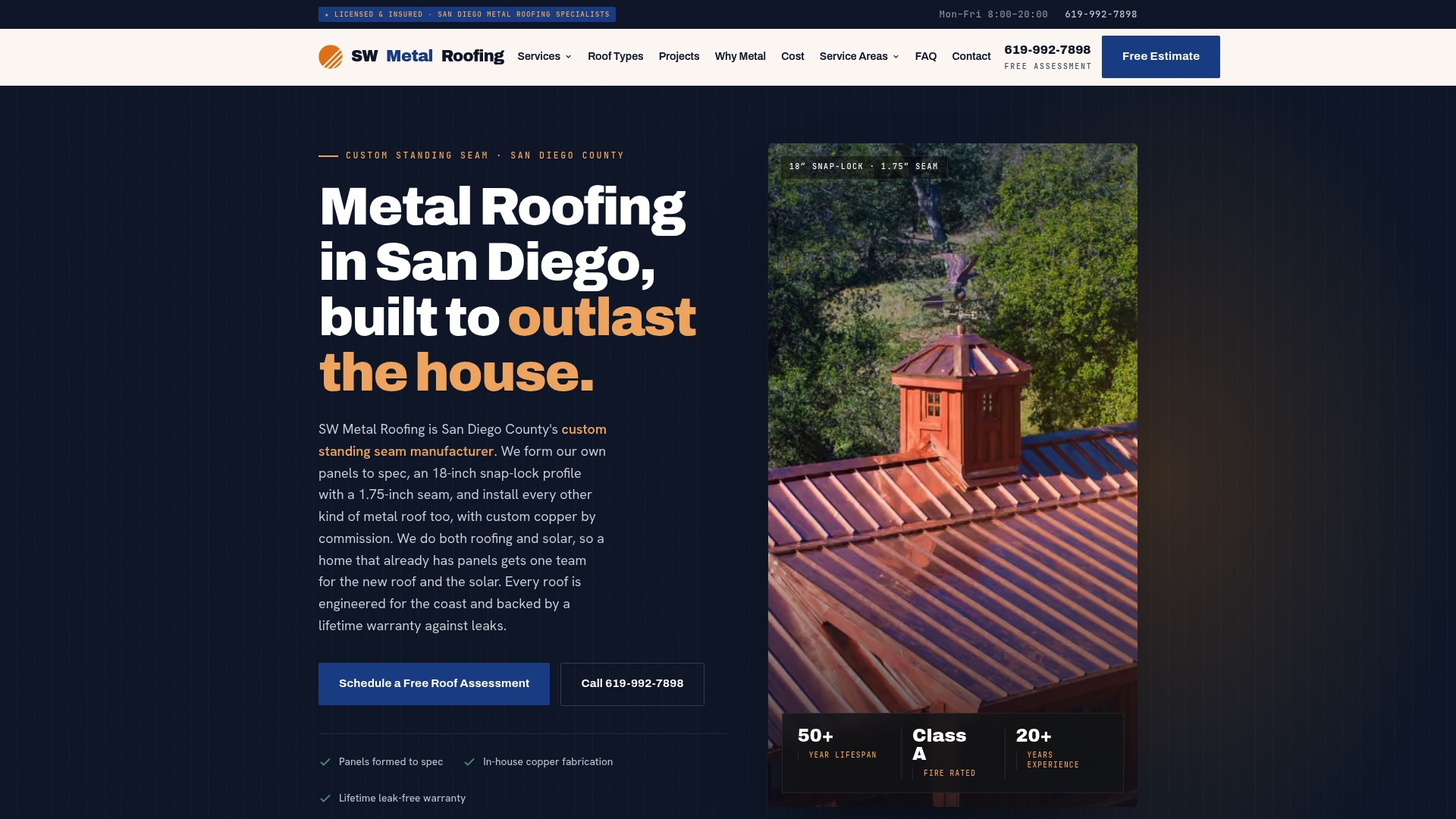
- Custom standing seam fabrication for metal roof installation and replacement
- Roofing and solar integration handled by one team
- A lifetime leak-free warranty on our installations
To see how we price standing seam, metal shingle and corrugated roofs, visit our cost page or request an on-site estimate and we will walk your roof with you.
FAQ
What is the average cost of a metal roof in San Diego?
Most San Diego homeowners pay somewhere in the middle of the local range. The San Diego estimate puts installed cost at $14,650 to $33,450, with a typical result around $24,050.
Why are San Diego metal roof prices higher than national averages?
Local labor costs more here, and permits and disposal add to the total. According to the same San Diego cost source, labor runs about 10 to 15 percent above the national average.
How much is the roofing permit in San Diego?
A roofing permit is a small line item compared with materials and labor. The local estimate lists it at roughly $325.
Does a metal roof work with solar panels?
Yes. Standing seam roofs accept clamp-style mounts that avoid drilling through the panels, so the roof stays weathertight. Planning both together lets one crew coordinate flashing and mounting points.