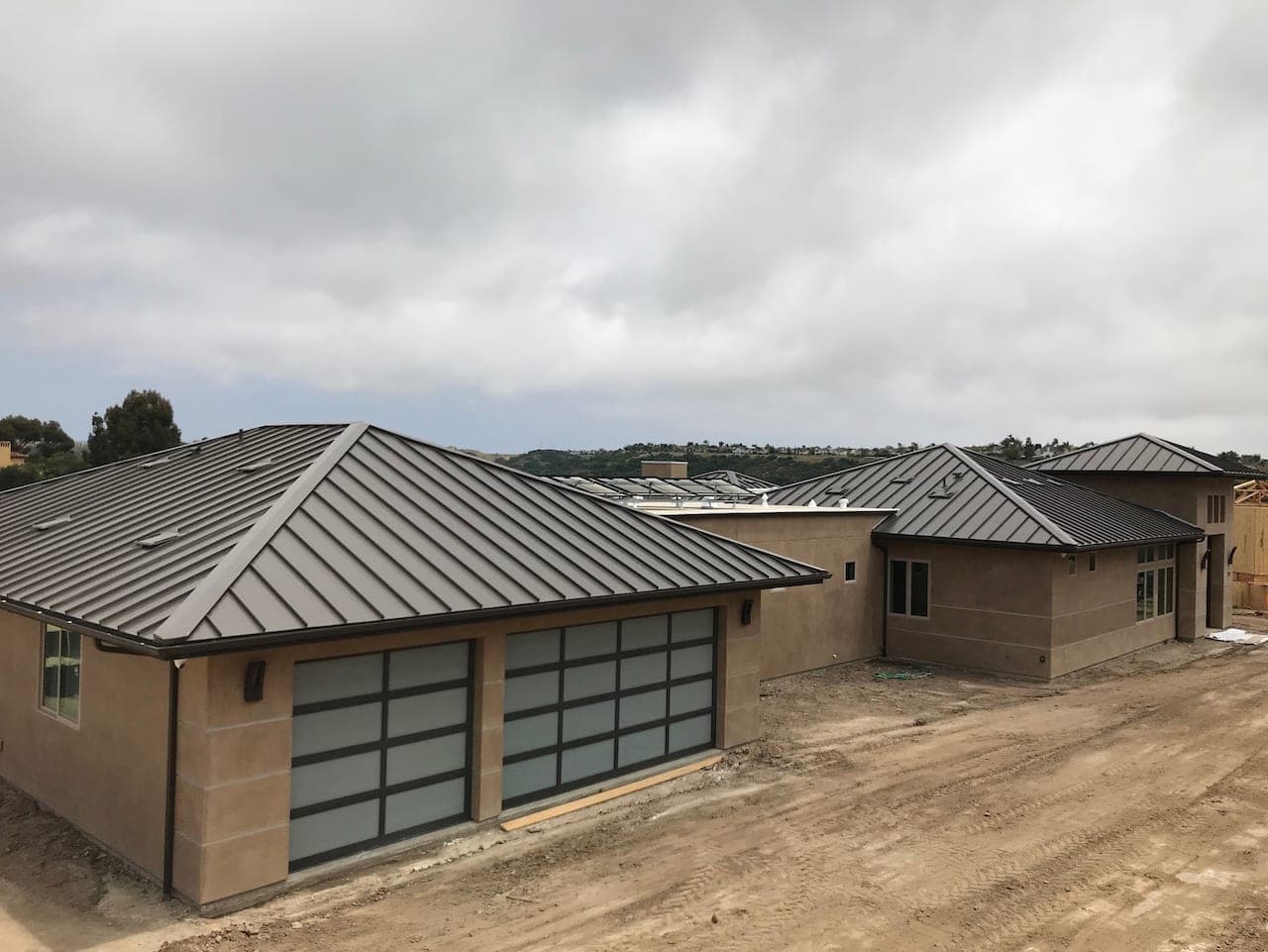
A large share of the homes we reroof in San Diego County already have solar on them. The panels usually have years of life left. The roof underneath them does not, and that is the problem the homeowner is calling us about.
The question we get asked first is whether the solar has to come off. It does. The more useful question is what the new roof does to the way those panels mount when they go back on, and that is where standing seam changes the answer.
Why most solar mounts put holes in your roof
On a shingle or tile roof, the racking has to reach through the roof covering and bolt into the rafters. Every mounting foot is a penetration, sealed with flashing and a sealant that is expected to hold for decades under full sun.
A typical residential array has dozens of those feet. None of them is unsafe when it is installed correctly, but each one is a place where the roof depends on a seal rather than on the roof itself.
- Dozens of fastener penetrations through the roof covering and into the framing
- Every one of them sealed, and every seal aging in San Diego sun
- Removing the array later leaves those holes to be patched
How the seam clamp works
Standing seam is a concealed-fastener system. The panels lock together along raised vertical seams, and the fasteners that hold the roof down sit under the metal where nothing can reach them. We form our own panels at 18 inches wide with a 1.75-inch seam, in 24-gauge galvanized steel with a Kynar finish.
A solar clamp grips that raised seam from the outside and tightens onto it. The rail sits on the clamps, the panels sit on the rail, and the load transfers into the roof structure through the seam. Nothing is drilled. Nothing is sealed. The roof covering is never opened.
This is the only common roofing system where a full solar array can be mounted without a single penetration through the roof covering.
If you already have solar, we detach and reset it
We do roofing and solar, so one team handles the whole sequence instead of you coordinating a roofer and a solar company who each blame the other for the schedule.
The array comes down, the old roof comes off, we inspect and repair the deck, the new standing seam goes on, and the panels go back up on seam clamps. You get one point of contact, one timeline and one company standing behind the result.
- Detach the existing array and store it on site
- Tear off the old roof and inspect the decking underneath
- Install underlayment and the new standing seam panels
- Reset the solar on seam clamps, with no new roof penetrations
The lifespan math is the real argument
A standing seam roof lasts 50 years or more. The panels on top of it will not. At some point they get serviced, upgraded or replaced, and when that day comes the clamps come off the seams and the roof is exactly as it was.
That is a very different position from a shingle roof, where servicing the array means reopening and resealing every mounting point. If you are going to keep solar on the house for the long run, the roof you clamp it to is worth choosing carefully.
What it costs
Standing seam runs about $22,000 to $34,000 installed on a typical San Diego home, with the final figure driven by roof size, pitch and how much custom flashing the house needs. Detaching and resetting an existing array is quoted separately, because it depends entirely on the size of the system and how it is currently mounted.
We put all of it in one written, line-item quote after a free assessment, so you are looking at one number for the finished job rather than two estimates that do not quite line up.