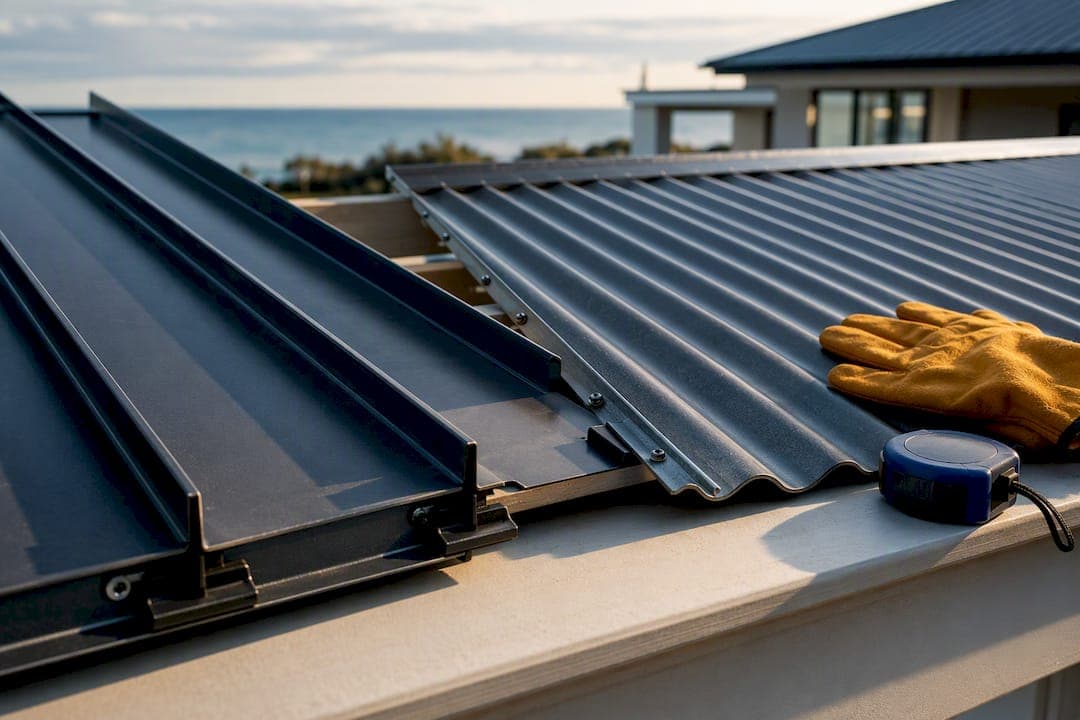
Standing seam is the better pick for most primary homes because its concealed fasteners cut leak risk and stretch service life well past corrugated panels, while corrugated stays the go-to for barns, sheds, and other budget-driven builds. The tradeoff comes down to money up front versus money saved over decades: corrugated costs less to install, but standing seam’s longer projected service life often makes it the cheaper option per year of ownership.
TL;DR:
- Standing seam roofs cost 40% to 60% more to install but can last up to 70 years, making them more cost-effective over a long lifespan.
- Corrugated panels have a shorter lifespan of 25 to 40 years and require periodic gasket and screw maintenance to prevent leaks.
- Proper installation of standing seam roofs depends on skilled labor and precise clip and seam fitting, which directly impacts wind resistance and leak prevention.
- Standing seam is better suited for homes exposed to coastal winds or salt air, especially when paired with fabrication designed for harsh conditions.
- For short-term ownership or budget-conscious projects like barns, corrugated roofing may be a practical choice despite its shorter durability.
Table of Contents
- Comparing the two systems at a glance
- How the two panel types actually differ
- Weighing the pros and cons for your home
- What it costs and how long each roof really lasts
- What installation and upkeep actually look like
- How to decide which roof fits your project
- Why fabrication quality matters more than marketing claims
- A straight answer on which roof to pick
- Get a standing seam roof built for your home
- Where these figures come from
- Sources
- FAQ
Comparing the two systems at a glance
The two roofing styles split along a handful of practical lines, and most homeowners can narrow their decision down to just a few of them.
- Installed cost: Corrugated panels run cheaper per square foot; standing seam costs more because of concealed clips, tighter tolerances, and often heavier gauge steel.
- Lifespan: Homeowner comparisons put standing seam at roughly 40 to 70 years against corrugated’s 25 to 40 years, with exposed fasteners as the main limiter on the latter.
- Maintenance: Standing seam needs periodic seam and sealant checks; corrugated needs its exposed screws and gaskets inspected and sometimes retightened or replaced.
- Wind and slope: Standing seam generally handles higher wind uplift and lower slopes better, thanks to its interlocking seams and clip attachment.
- Appearance: Standing seam reads as clean and modern; corrugated has a ribbed, utilitarian look that suits outbuildings more than architectural homes.
For a primary residence, especially one exposed to coastal wind or salt air, standing seam is usually the sound long-term choice. For a barn, workshop, or shed where budget matters more than curb appeal, corrugated does the job well.
How the two panel types actually differ
The core difference between these systems is how the panels attach to the roof deck, and that single detail drives almost everything else.
Standing seam panels interlock along raised seams, either snapped together (snap-lock) or mechanically crimped with a seaming tool. Concealed clips anchor the panels to the deck while allowing them to move as metal expands and contracts with temperature, which prevents panel fatigue and keeps fasteners out of the weather.
Corrugated panels, by contrast, use an exposed-fastener system: screws with rubber or neoprene gaskets go straight through the panel into the deck or purlins, usually in a repeating wave or rib pattern. These panels tend to run in thinner gauges than standing seam.
Both systems come in steel, aluminum, and occasionally copper, often with factory-applied coatings. Those coatings matter beyond looks: reflective fluoropolymer or silicone-polyester finishes help metal roofs meet cool-roof performance standards and resist corrosion over time.
Weighing the pros and cons for your home
Every roofing decision comes down to what you are willing to trade for what you need.
- Standing seam pros: Concealed fasteners mean fewer leak points, generally higher wind ratings, and a longer service life.
- Standing seam cons: Higher installed cost and a need for skilled installers who can seam and fit clips correctly.
- Corrugated pros: Lower cost and a much faster installation timeline.
- Corrugated cons: Exposed screws and gaskets age over time and need periodic attention to avoid leaks.
The leak risk with corrugated isn’t really about the panel itself. It’s about the hundreds of penetration points where a screw and gasket sit between your roof and the weather. Each one is a potential failure point, and gaskets degrade faster in direct sun and temperature swings than the metal around them.
Pro Tip: When inspecting an existing roof for repair or replacement, check for backed-out screws, cracked or flattened gaskets, and rust streaks below fastener heads. On standing seam roofs, look for loose or bent clips and any gaps in the seam sealant at laps and end joints.
What it costs and how long each roof really lasts
Cost and lifespan are where the real decision gets made, and they’re tied together more closely than most people assume.
Homeowner-facing cost comparisons put standing seam at roughly 40% to 60% more than corrugated on installed price, largely due to labor, clip hardware, and heavier gauge material. That premium buys a system rated for roughly 40 to 70 years of service versus 25 to 40 years for corrugated.

Industry service-life work on unpainted 55% Al-Zn alloy-coated steel standing seam systems projects service life beyond 60 years when panels are installed to best practice, though butyl sealant at laps and joints is often what limits real-world lifespan rather than the metal itself.
The math favors standing seam whenever you plan to stay in the home long enough to amortize the higher install cost. On a building you’ll own for five to ten years before selling, corrugated’s lower upfront price may make more sense.
What installation and upkeep actually look like
Installation quality separates a roof that lasts decades from one that leaks within a few years.
Standing seam panels sometimes require a seaming machine on site, and clip spacing and fit have to be precise because clip design directly affects wind uplift performance and long-term seam behavior. Corrugated installation is more forgiving but still depends on correct screw spacing and gaskets seated evenly so they compress without cracking.

Common failure points to watch for including improperly fitted clips, breached seam sealant on standing seam roofs, and loose screws or degraded gaskets on corrugated ones.
A basic maintenance routine covers most problems before they become leaks:
- Walk the roof (or have it inspected) once a year, and after any major storm.
- Check seam sealant and clip attachment on standing seam roofs, or screw tightness and gasket condition on corrugated ones.
- Clear debris from valleys and gutters so water doesn’t pool against seams or fasteners.
- Address any rust, staining, or loose hardware immediately rather than waiting for the next inspection cycle.
How to decide which roof fits your project
Start with how you’ll use the building, how long you plan to keep it, and how exposed it is to wind or salt air. A primary home in a harsh coastal climate leans toward standing seam; a detached garage or storage barn often doesn’t need that level of investment.
When you’re comparing bids, ask each contractor:
- What clip type and seaming method they use, and why.
- What gasket specification they install on exposed-fastener systems.
- What the warranty covers, including labor and workmanship, not just material defects.
- Whether they can provide references from similar installs in your climate.
Vague answers about clip type or seaming method are a red flag, and so is a bid with no warranty specifics or no willingness to share references.
Why fabrication quality matters more than marketing claims
Correct clip selection and seam type matter for wind resistance and longevity because the seam is the roof’s main defense against water and uplift. SW Metal Roofing fabricates custom standing seam panels in San Diego, including an 18-inch snap-lock profile built specifically for coastal wind and salt exposure, and pairs that with roofing and solar panel integration so homeowners deal with one team instead of two.
A roof is only as good as its weakest seam and its least-attended fastener.
Work is often covered by leak-free warranties, reflecting confidence in both fabrication and installation.
A straight answer on which roof to pick
Standing seam wins for most homes you plan to keep, thanks to fewer leak points and a much longer service life. Corrugated still makes sense for outbuildings or short ownership horizons where upfront cost matters more than decades of durability. Compare life-cycle cost, not just the number on the first bid.
— Marcus
Get a standing seam roof built for your home
SW Metal Roofing fabricates custom standing seam panels, including the 18-inch snap-lock profile designed for coastal wind and salt air, and backs every installation with a lifetime leak-free warranty. The same team also handles roofing and solar panel integration, so you’re not coordinating between separate contractors for your roof and your panels.
| What you get | Detail |
|---|---|
| Panel fabrication | Custom standing seam, including 18-inch snap-lock coastal profile |
| Warranty | Lifetime leak-free warranty |
| Added service | Roofing and solar panel integration |
If you’re weighing standing seam against corrugated for your own roof, get a cost estimate from SW Metal Roofing and see what a custom-fabricated system runs for your home.
Where these figures come from
Figures and technical claims draw on the Metal Construction Association’s clip and seaming guidance, service-life assessments, and DOE cool-roof guidance.
Sources
- Cool Roofs: Guidance and Technical Resources (U.S. DOE)
- Standing Seam vs Corrugated Metal (HomeMatchup)
FAQ
What are the disadvantages of a standing seam roof?
Standing seam roofs cost more to install than most alternatives, and they require skilled labor for proper clip fit and seaming. Poor installation, especially loose or misfit clips, can undercut the wind performance and longevity the system is otherwise known for.
What are the disadvantages of corrugated roofing?
Corrugated roofing relies on exposed screws and gaskets that degrade with sun and temperature cycling, so gaskets and screws often need periodic attention to avoid leaks. It also tends to have a shorter service life than standing seam and a more utilitarian appearance.
What is the cost difference between a standing seam roof and a corrugated metal roof?
Standing seam typically costs roughly 40% to 60% more installed than corrugated, mainly due to labor, clip hardware, and heavier gauge material. The gap narrows in life-cycle terms since standing seam usually lasts longer.
How many years will a standing seam metal roof last?
Homeowner comparisons put standing seam’s typical lifespan at roughly 40 to 70 years, and industry service-life assessments on certain coated steel systems project service life beyond 60 years when installed to best practice. Sealant condition at laps and joints is often the real limiter, not the metal itself.