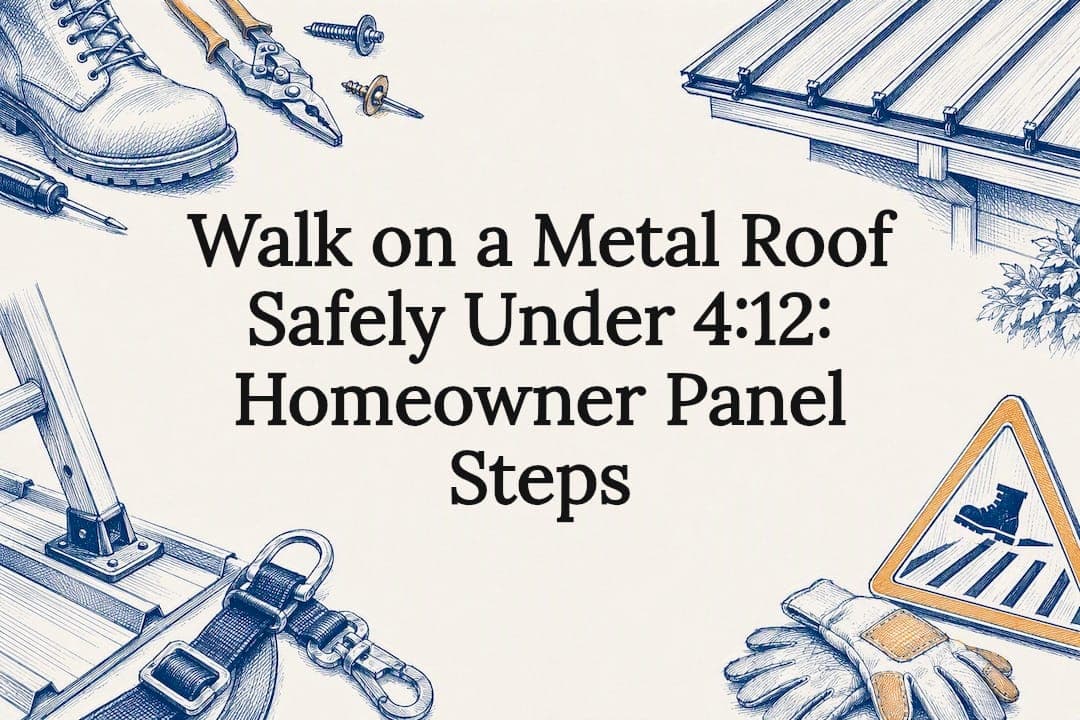
Yes, most modern metal roofs can be walked on safely, but only under the right conditions. Standing seam and stone-coated panels tolerate foot traffic far better than thin, exposed-fastener corrugated sheets, and dry, cool mornings on a pitch under 4:12 are your safest window. Anything steeper, wetter, or hotter, and the equation shifts fast: you need fall protection or you need to call OSHA-informed manufacturer guidance and a licensed crew instead.
TL;DR:
- Metal roofs with standing seam or stone-coated panels are more walkable than thin, exposed-fastener sheets, especially on dry, cool mornings with a pitch under 4:12.
- Proper footwear, such as soft rubber soles, and tools like walk pads or plywood sheets significantly reduce damage and slipping risks during access.
- Stepping in the correct zones on panels, like the flat between seams or valleys aligned with purlins, prevents denting and oil-canning; unsupported flats are unsafe.
- Roof pitch steeper than 4:12 and wet or hot conditions require fall protection systems and professional expertise to avoid injury.
- For complex or damaged roofs, or pitches above 4:12, hiring a licensed contractor with proper safety gear is the safest and most effective choice.
Table of Contents
- How to Walk on a Metal Roof: A Quick Pre-Access Checklist
- Footwear and Basic Tools for Walking on Metal Roofs
- Where to Step on Different Metal Roof Panel Types
- Fall Protection and Ladder Safety Basics
- Damage Risks and How to Prevent Them
- When to Call a Licensed Roofing Contractor Instead
- What a Licensed Metal Roof Contractor Actually Checks
- The Real Risk Isn’t the Metal, It’s the Overconfidence
- Schedule a Safe, Professional Roof Inspection
- Sources
- FAQ
How to Walk on a Metal Roof: A Quick Pre-Access Checklist
Before your boots touch a single panel, run through this order of operations.
- Check the weather. Walk only on a dry surface with no wind gusts. Early morning is best, since metal panels can hit dangerously hot surface temperatures in direct afternoon sun, according to Rooflio’s Florida homeowner guide.
- Inspect from the ground first. Use binoculars to scan for loose panels, popped screws, rust spots, and skylights, a step ladder-safety guidance recommends before anyone climbs.
- Set your ladder correctly. Use the 4:1 ratio, tie it off, and extend it at least 3 feet above the roofline. Have someone spot you from below.
- Wear clean, soft rubber-soled shoes. Wipe debris off your soles before you climb; grit or gravel under a boot acts like sandpaper on painted steel.
- Protect vulnerable spots. Lay temporary plywood or a walk pad over any area you’ll cross repeatedly, and move slowly with three points of contact at all times.
Pro Tip: Walk the roofline mentally before you climb. Decide your exact path from the ladder to the work area so you’re not improvising footing decisions forty feet up.
Footwear and Basic Tools for Walking on Metal Roofs
The single biggest variable in metal roof safety isn’t the roof. It’s what’s on your feet. Clean, soft-soled rubber-bottom shoes provide the traction and forgiveness you need on a slick, uneven surface, according to AM-Supply’s safety guidance. Hard-soled work boots, dress shoes, and anything with metal cleats are the opposite of what you want. Rigid soles bridge across ribs unevenly, concentrate your weight on tiny contact points, and slide the moment they hit dew or pollen film.
Basic gear worth having on hand:
- Soft, flat-soled sneakers or roofing-specific rubber boots, wiped clean before every climb
- A dedicated roof ladder with stabilizer bar for standing seam or low-slope sections, versus a standard extension ladder for access only
- Foam walk pads or adhesive walkway strips for spots you’ll cross more than once
- Plywood sheets (at least 3/4 inch) to bridge weak spans temporarily
- Low-profile walk boards for distributing weight across multiple panels at once
If your roof’s pitch pushes you into fall-protection territory, a basic homeowner personal fall arrest system, harness, lanyard, and portable anchor, typically starts around $100 for entry-level kits. That’s a small price against a fall from even a single-story roof, and it’s worth budgeting for before you ever climb.
Where to Step on Different Metal Roof Panel Types
Not all metal roofing behaves the same way underfoot, and this is where most DIY damage happens. Panel type and load zone dictate where your weight actually belongs.
- Standing seam: Step in the flat field between the raised seams, never on the seams themselves or along the fastener line. The seams are structural edges, not walking surfaces, and stepping on them can cause permanent creasing.
- Corrugated or ribbed panels: Step in the valleys, and only where you can confirm decking or a purlin sits directly beneath. Unsupported flats between purlins flex under body weight and can dent or oil-can instantly.
- Exposed-fastener, thin-gauge panels: Avoid walking on these whenever possible. If you must, lay plywood first and spread your weight across it rather than stepping directly on the metal.
- Stone-coated steel or metal shingles: Walk on the upper half of each shingle course, closer to the overlap, where there’s more support beneath the coating. Foam backing helps if you’ll be crossing the same path repeatedly.
Insiders locate purlins and battens by tracing the visible fastener lines across the roof. Stepping between those lines, on a rib with nothing underneath, can dent or permanently oil-can a panel even without puncturing it. Standing seam and stone-coated systems generally forgive foot traffic better than thin corrugated sheet, which is one reason contractors favor them for roofs that need regular access for solar maintenance or chimney work.
Fall Protection and Ladder Safety Basics
Here’s the thing nobody wants to hear: the metal usually isn’t what hurts you. The fall is. Roofing accounts for a disproportionate share of construction fatalities, and that risk doesn’t disappear just because your roof is over your own garage instead of a job site.
The line most homeowners should treat as a hard stop is a roof pitch steeper than 4:12. Beyond that slope, industry practice and OSHA guidance point to a Personal Fall Arrest System, a full-body harness, a shock-absorbing lanyard, and a secured anchor or lifeline, as required rather than optional.
If you’re setting up gear yourself, follow this sequence:
- Confirm your roof pitch before you climb; a simple angle finder or smartphone app works fine.
- For anything over 4:12, install a temporary roof anchor rated for fall arrest, not a decorative hook or vent pipe.
- Attach your harness and lanyard, and test the connection at ground level before you go up.
- Set the ladder at a 4:1 angle, tie it off at the top, and extend it 3 feet past the roofline, exactly as Virginia Tech’s ladder safety program outlines.
- Once on the roof, keep three points of contact, move slowly, and avoid sudden pivots or carrying tools in both hands.
Pro Tip: Never carry a load up the ladder in your hands. Use a tool belt or a rope-and-bucket system so both hands stay free for the climb.
Damage Risks and How to Prevent Them
Walking damage on metal roofing almost always comes down to concentrated force on an unsupported span. A boot heel landing between purlins acts like a small hammer strike, and repeated over the same spot, it produces dents, scuffed finish, oil-canning waves, or fasteners that work loose over time. Thin corrugated and exposed-fastener panels take the brunt of this; standing seam and stone-coated systems hold up noticeably better, according to New England Metal Roof’s walkability analysis.
You reduce that risk by spreading your weight instead of concentrating it. Wider, softer-soled shoes already help. Beyond footwear, a few low-cost products do the heavier lifting:
- Adhesive foam walk pads placed along frequent-access routes
- Temporary 3/4 inch plywood laid across weak spans during a project
- Pre-installed walkway strips for solar panel or chimney access points
- Foam-backed shingle systems where recurring foot traffic is unavoidable
Professionals often install permanent walkway pads along the same routes homeowners would use for solar servicing or chimney maintenance, concentrating wear on a designed path instead of scattering it across the whole roof. After any access, walk the ground perimeter and check the roof from below for fresh dents, scuff marks, or displaced fasteners before you consider the job done.
When to Call a Licensed Roofing Contractor Instead
Some situations aren’t DIY-friendly no matter how careful you are. Stop and call a professional if you see any of the following:
- Roof pitch steeper than 4:12, where safe footing requires rigged fall protection
- Visible storm damage, hail dents, or lifted panels you can’t identify from the ground
- Corrosion, rust streaking, or multiple popped fasteners across a section
- Complex penetrations like chimneys, skylights, or multiple roof valleys converging
- A roof surface too hot to touch comfortably, which signals both burn risk and finish softening
A licensed crew brings anchored PFAS systems, roof ladders and staging built for the job, and the experience to locate purlins by feel as much as by sight. Weigh that against the cost of a cracked panel or a fall injury, and the math usually favors the phone call over the ladder.
What a Licensed Metal Roof Contractor Actually Checks
SW Metal Roofing builds custom standing seam systems in San Diego, including an 18 inch snap-lock profile engineered specifically for coastal wind and salt exposure, backed by a lifetime leak-free warranty. That kind of fabrication work means the crew already understands, panel by panel, where a roof can and can’t take foot traffic.
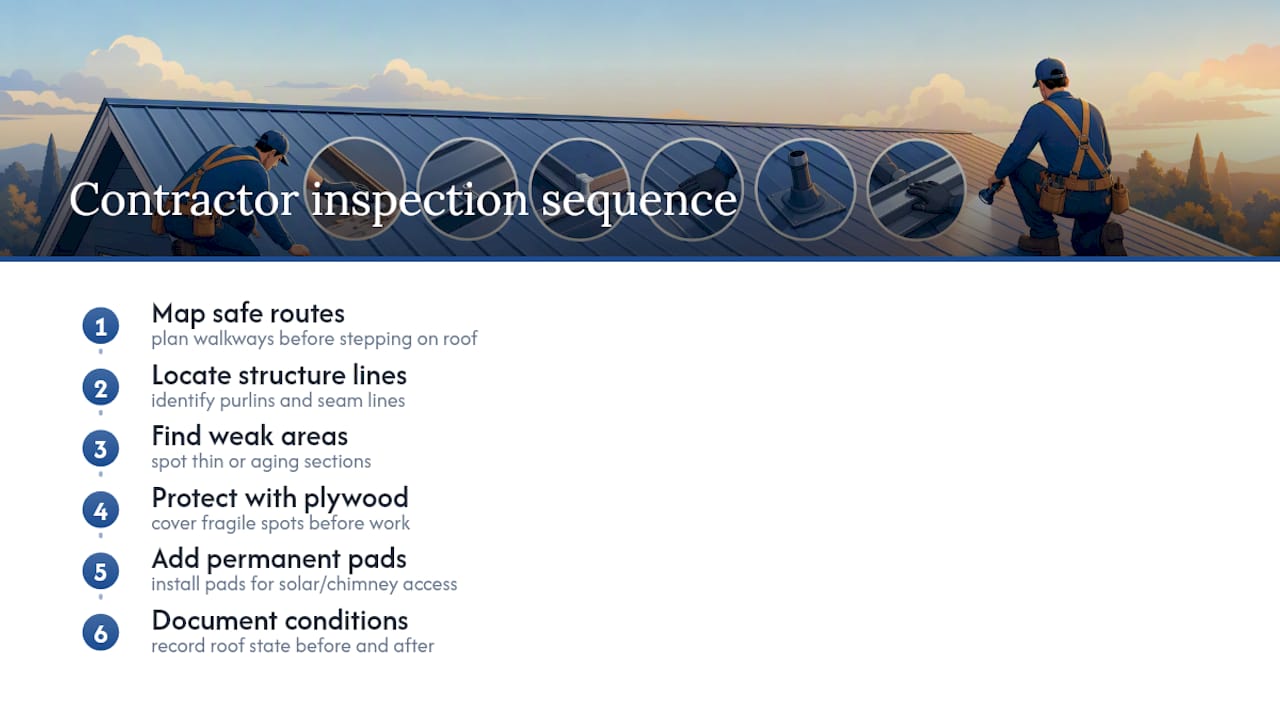
A qualified inspection team maps out walk routes before anyone steps on the roof, identifying purlin locations, seam lines, and any thin or aging sections that need plywood protection. Where solar integration or chimney access requires repeat trips, they often install permanent walkway pads rather than leaving future maintenance to guesswork. Every finding gets documented, so you know exactly what condition your roof was in before and after service, whether that’s a routine inspection or a post-storm assessment.
The Real Risk Isn’t the Metal, It’s the Overconfidence
Most of the fear around metal roofs is misplaced. The material itself handles foot traffic reasonably well when you respect panel type and load zones. The actual danger is a homeowner who’s watched one video, skips the ladder math, and steps onto a wet standing seam roof in dress shoes because “it’s just a quick look.”
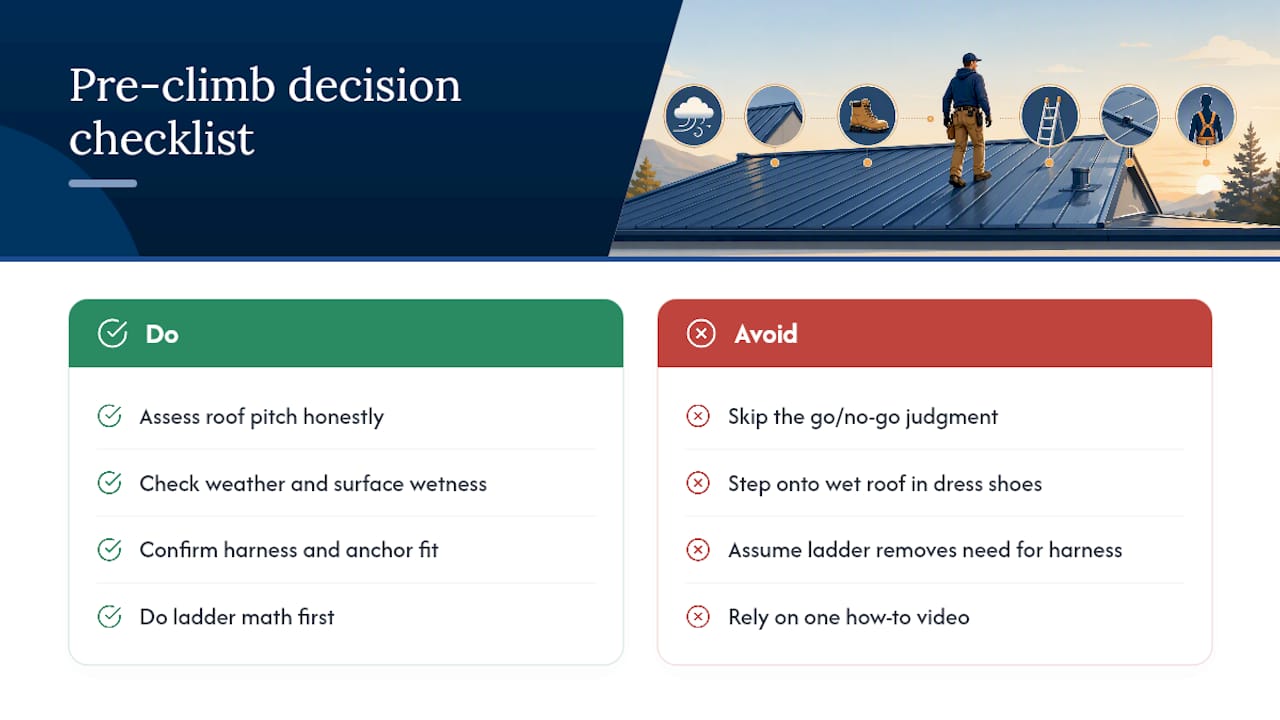
Conventional advice tends to focus entirely on footwear and technique, and both matter. But the thing that gets skipped is the go/no-go decision before you ever climb: pitch, weather, and whether you actually have fall protection appropriate for the slope. That single judgment call prevents more injuries than any amount of careful stepping once you’re already up there.
If there’s one thing worth prioritizing above the rest, it’s honesty about your own limits. A roof that requires a harness and anchor isn’t a weekend project just because you own a ladder. Homeowners who treat the pitch threshold as a real line, not a suggestion, are the ones who never end up as a statistic in a fall-protection report. Everything else, the shoe choice, the walk pads, the panel-by-panel technique, only matters once that first decision is made correctly.
— Marcus
Schedule a Safe, Professional Roof Inspection
If your roof’s pitch, age, or storm history puts it outside safe DIY territory, SW Metal Roofing gives San Diego homeowners a licensed alternative to guesswork on a ladder. Rather than renting gear and hoping your technique holds up, you get a crew that already knows where every purlin sits and how much weight each panel can take.
SW Metal Roofing’s maintenance and inspection service covers the exact situations this article flags as no-go zones: steep pitches, storm damage, popped fasteners, and roofs nobody’s checked in years. If your panels need more than a look, whether that’s repair work on a damaged section or a full standing seam upgrade with solar integration built in, the same team handles it start to finish, backed by a lifetime leak-free warranty. Request an inspection through the maintenance page and skip the ladder entirely.
Sources
For deeper reading on the topics covered here, Virginia Tech’s ladder safety program covers OSHA-aligned setup rules, while AM-Supply’s footwear guidance and New England Metal Roof’s panel analysis break down safe technique by material type. For general slip-resistant surface concepts, see this guide to weatherproof decking methods.
- Metal roof walkability, panel types and load zones — Roof Insider
- Safety tips for walking on a metal roof — AM-Supply
- Ladder safety — Virginia Tech EHS
FAQ
Can I Walk on My Metal Roof?
Yes, in most cases, as long as the surface is dry, the pitch is under 4:12, and you’re using proper footwear and technique. Steeper pitches or roofs with visible damage call for fall protection or a professional inspection instead.
What Type of Shoes Are Best for Walking on a Metal Roof?
Clean, soft-soled rubber-bottom shoes give you the best grip and won’t scratch the panel finish. Avoid hard-soled boots, dress shoes, or anything with metal cleats, and make sure your soles are free of debris before you climb, per AM-Supply’s safety guidance.
Will Walking on a Metal Roof Damage It?
It can, especially on thin, exposed-fastener panels where stepping between purlins causes denting or oil-canning. Standing seam and stone-coated systems hold up better, and walk pads or plywood reduce the risk further on any panel type.
How Do You Walk on a Metal Roof Without Slipping?
Move slowly, keep three points of contact, and step in supported zones like the flat field of standing seam panels or the valleys of corrugated ones. Never attempt it on a wet, icy, or extremely hot surface, and always confirm your ladder is set at a 4:1 angle and tied off before you climb.
When Should I Hire a Professional Instead of Walking My Own Roof?
Call a licensed contractor if your roof pitch exceeds 4:12, you spot storm damage or corrosion, or you’re unsure about the roof’s condition. SW Metal Roofing’s inspection and maintenance service handles these cases with the anchored equipment and panel knowledge a DIY attempt can’t match.